Over 400 years ago, the dance of Izumo no Okuni captivated all of the audience, which became KABUKI, and from that Japanese Dance was born. Whether you’ve seen it before or not,
we hope you find it interesting…
Today, we’ll talk about how common people in Edo spent their summers.
|Summer Life of Edo Commoners
Today, we rely on air conditioners, refrigerators, and other appliances to cope with the intense summer heat, but in the Edo period, when such conveniences did not exist, how did people get through the summer? In the town of Edo, there were various ingenious ways to spend the season while embracing the heat.
|Summer Preparations
Yoshizu (reed screens) and sudare (bamboo blinds) hung along the eaves softened the strong summer sunlight and let the breeze flow through, keeping the interior cool while offering gentle privacy from outside. Uchimizu, the practice of sprinkling water on the streets, created a visually refreshing scene and not only helped cool the surroundings but also prevented dust from rising on the unpaved roads of the era.
People also sought coolness through sights and sounds, even if these did not actually lower the air temperature.
Goldfish became more accessible to commoners in the mid‑Edo period when samurai began breeding them in large numbers as a side business. Instead of modern glass tanks, they were kept in ceramic bowls or wooden tubs, and were appreciated from directly above. For this reason, the “Ranchu” variety, developed through selective breeding in that era, has no dorsal fin and features a large, flowing tail. When viewed from above, its form spreads out like a blooming flower, creating a beautifully elegant appearance.
Wind chimes also became widely available in the late Edo period as glass‑making techniques spread, making them affordable for ordinary townspeople. Wind‑chime sellers walked through the streets carrying many chimes on a balance pole, letting their gentle chirin‑chirin sound serve as their “sales call” instead of shouting. At the time, chimes painted entirely in bright red were the most common, as both their color and their sound were believed to ward off evil and protect against illness. Because of this, many households kept them hanging from their eaves or verandas throughout the year.
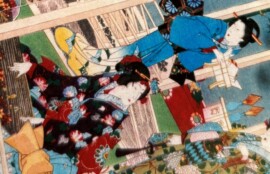
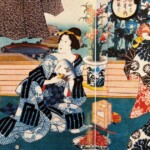
“Goldfish Series: Bubble Vender (Tamaya Tamaya)” by Utagawa Kuniyoshi from Cultural Heritage Online
https://online.bunka.go.jp/heritages/detail/553490
|Summer Daily Rhythms
The town of Edo kept time using a variable‑hour system, in which the length of each hour was determined by the height of the sun.
Because summer days were long, people began working in the cool early morning and slowed their pace during the hottest hours of the day, often taking extended breaks or even a midday nap to live in harmony with the season. They finished their work early, bathed at the public bathhouse around midday, and spent the afternoon in a relaxed manner.
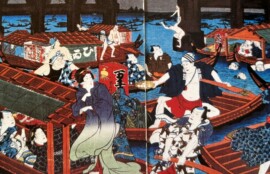
They finished their work early, bathed at the public bathhouse around midday, and spent the afternoon in a relaxed manner. As the sun began to set, they went out to enjoy the cool of the evening. Along the river, where a gentle breeze drifted, the paths were said to fill with people enjoying a leisurely stroll at dusk.
During this time of day, in addition to the peddlers who had been selling goods since the afternoon, night stalls such as goldfish sellers and toy vendors appeared, delighting children. This evening coolness, a special delight of summer, was one of the cherished pleasures of life in Edo.
However, this gentle way of spending summer was not possible for the live‑in apprentices of merchant families. Working from dawn until nightfall, they had no time to enjoy the evening cool. Only on the single holiday known as “Nochi no Yabu‑iri”, on the sixteenth day of the seventh month in the old lunar calendar, could they savor a fleeting moment of summer with the small allowance given by their masters.
|Summer Delicacies
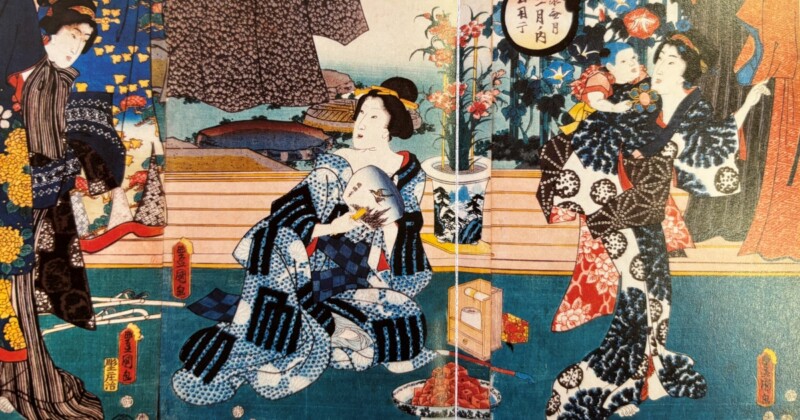
Foods and drinks that brought a sense of coolness were essential to summer in Edo. Watermelon, which often appears in ukiyo‑e prints, was a popular treat. People chilled it in well water and enjoyed it during the evening cool, which was considered the height of luxury. After eating the red flesh, the white rind was chopped and made into salted pickles, rice‑bran pickles, or simmered dishes. The seeds were collected, dried in the sun, roasted until fragrant, and sprinkled with salt to be eaten as snacks with tea or sake, ensuring nothing went to waste.
Cold spring water, sold with the vendor’s call of “hyakkoi, hyakkoi” (“cold, cold”), was sweetened with sugar and small shiratama dumplings added to well water or spring water, and served in metal bowls made of tin or brass. These metal vessels were said to offer a sharp, immediate chill the moment they were picked up, a stylish touch that allowed people to savor coolness with all five senses.
There were also other peddlers to be seen in summer, such as the “Mugiyu sellers”, who sold barley tea made by simmering fragrant roasted barley; the “Biwayoto sellers”, who walked the streets carrying crow‑patterned fans and folding fans inspired by Kyoto’s Karasuma district and sold a medicinal drink made by simmering loquat leaves with herbal ingredients; and the “Amazake sellers”, whose sweet fermented drink was widely valued as a remedy to prevent summer fatigue.
The “Tokoroten sellers”, who offered this refreshing summer delicacy, were also extremely popular. Carrying square wooden boxes, they performed a live demonstration called “Tentuki”, pressing the jelly through a mold to create long, thin noodles. Unlike in the Kansai region, where Tokoroten was enjoyed as a sweet with black sugar syrup, in Edo it was eaten with vinegar‑soy sauce and a touch of mustard. It was typically eaten with just one chopstick, since it was not considered expensive enough to warrant a full pair, and the brisk, slurping way of eating it was said to be a favorite of the quick‑tempered Edo townspeople.
And eel, which is still commonly eaten today as a nourishing food, was also a familiar part of summer in Edo.
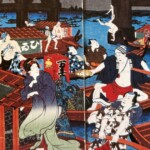
“Twelve Months: June, Cooling Down at a Gate” by Keisai Eisen from Edo-Tokyo Museum
https://museumcollection.tokyo/works/6231152/
It is truly amazing to see the various ingenious ways commoners in the Edo period used to cope with the summer heat; the sight of itinerant vendors bringing coolness to the sweltering days feels strangely familiar, much like modern-day delivery services.
*This site contains promotions.
◆CONTACT
https://miya-ds.com/en/contact/
◆TRIAL LESSON
https://miya-ds.com/en/trialsession/
◆JAPANESE DANCE SCHOOL MIYA
https://miya-ds.com/en/
◆MIYANAGI RYU
https://www.miyanagiryu.com